Product Name:
Human Long-chain-fatty-acid-CoA ligase 3 (ACSL3) ELISA Kit
Cat.#:
JL55211
Regulatory Status:
Alternative:
ACS3; FACL3; LACS3; Fatty-Acid-Coenzyme A Ligase,Long-Chain 3; Long-chain acyl-CoA synthetase 3;Acyl Coenzyme A Synthetase Long Chain Family, Member 3
Detection Method:
ELISA
Assay Type:
Sandwich
Detection Range:
78-5000ng/mL
Sensitivity:
3.40ng/mL
Specificity:
This kit recognizes Human ACSL3 in samples. No significant cross-reactivity or interference between Human ACSL3 and analogues was observed.
Sample Type:
Tissue homogenates, cell lysates and other biological fluids
Assay Procedure:

Research Area:
Metabolism
Size & Price: 
Product Datasheets
Instruction: 
| ACSL3
Long-chain acyl-CoA synthase family member 3, also known as ACSL3, is an enzyme encoded by the ACSL3 gene. The protein encoded by this gene is an isoform within the long-chain fatty acid-CoA ligase family. Despite differences in substrate specificity, subcellular localization, and tissue distribution, all isoforms in this family convert free long-chain fatty acids into fatty acyl-CoA esters, thereby playing a crucial role in lipid biosynthesis and fatty acid degradation. This isoenzyme is highly expressed in the brain and preferentially utilizes myristic acid, arachidonic acid, and eicosapentaenoic acid as substrates. The amino acid sequence of this isoenzyme shares 92% identity with that of its rat homolog. Two transcript variants encoding the same protein have been identified for this gene.| Typical data
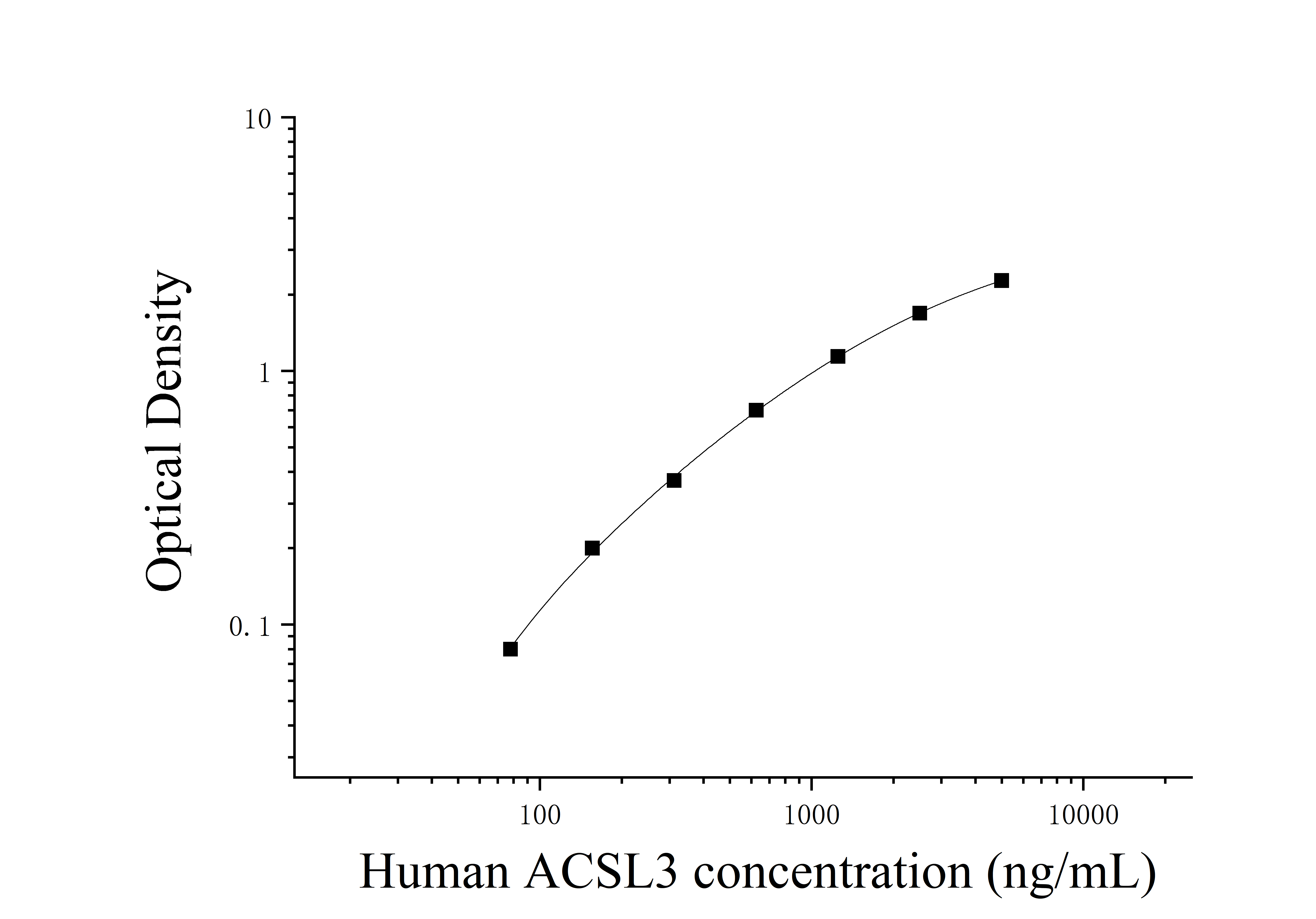
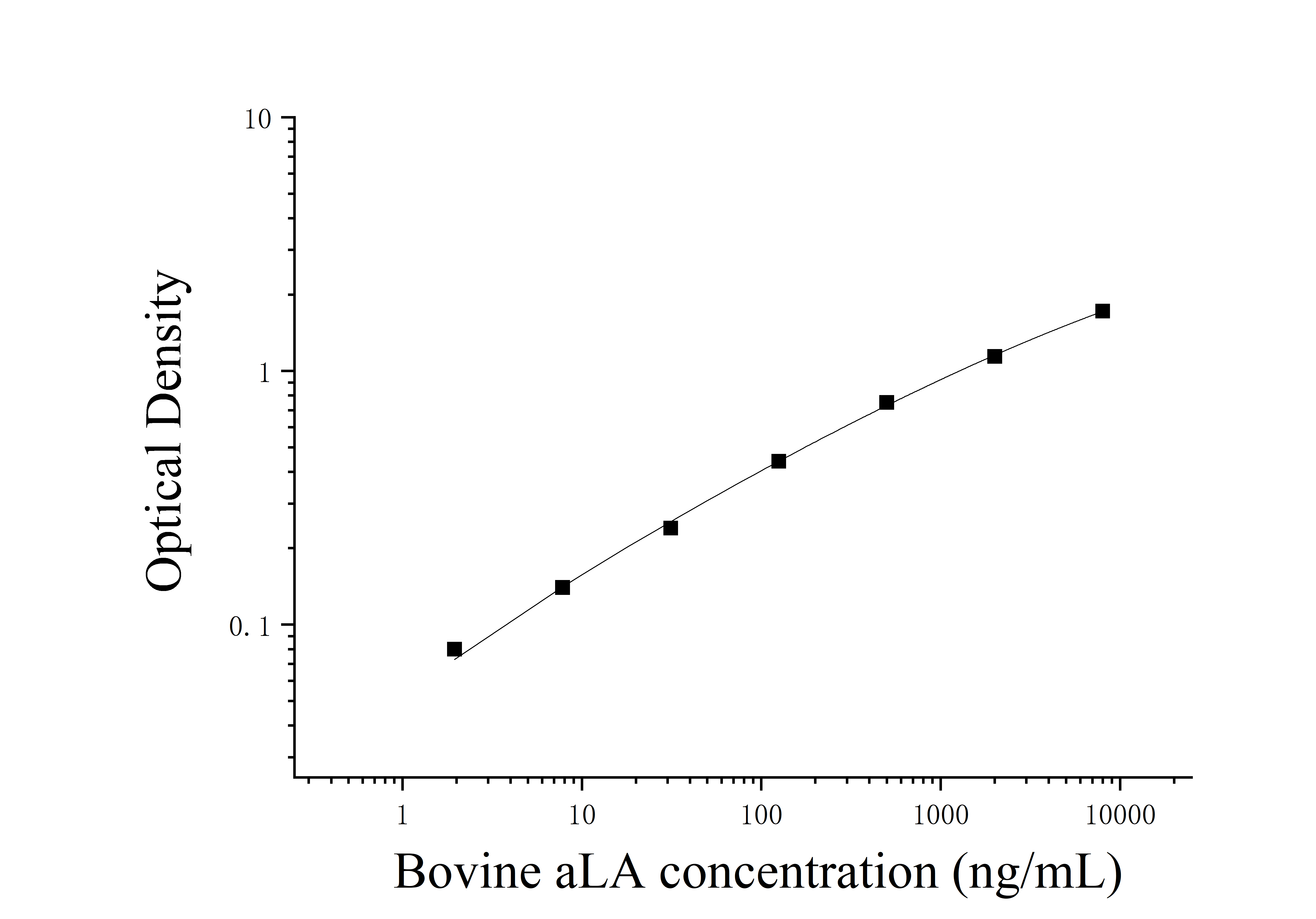
As the OD values of the standard curve may vary according to the conditions of the actual assay performance (e.g. operator, pipetting technique, wash technique or temperature effects), the operator should establish a standard curve for each test. Typical standard curve and data are provided below for reference only.| Concentration (ng/mL) | 5000 | 2500 | 1250 | 625 | 312 | 156 | 78 | 0 |
| OD | 2.36 | 1.78 | 1.23 | 0.79 | 0.46 | 0.29 | 0.17 | 0.09 |
| Corrected OD | 2.27 | 1.69 | 1.14 | 0.7 | 0.37 | 0.2 | 0.08 | - |
| Repeatability
Intra-assay Precision (Precision within an assay):CV% < 10%; Inter-assay Precision (Precision between assays):CV% < 10%| Recovery
The recovery of Human ACSL3 spiked at three different levels in samples throughout the range of the assay was evaluated in various matrices.| Sample Type | Range(%) | Average Recovery(%) |
| Tissue Homogenates(n=8) | 84-101 | 96 |
| Cell Lysates(n=8) | 92-105 | 102 |
| Linearity
Samples were spiked with high concentrations of Human ACSL3 and diluted with Universal Diluent to produce samples with values within the range of the assay.| Tissue Homogenates(n=4) | Cell Lysates(n=4) | ||
| 1 : 2 | Range (%) | 84-95 | 88-96 |
| Average (%) | 88 | 93 | |
| 1 : 4 | Range (%) | 89-100 | 87-108 |
| Average (%) | 94 | 98 |
Related Product



Size
Quantity
Price ($)
48T
 1
1

460 / 460
96T
1
760 / 760